
Coronavirus and Bitcoin: Why COVID-19 is Bitcoin’s Biggest Test
Bitcoin and Coronavirus (COVID-19) is economic history in motion: Not only is Bitcoin facing its first genuinely unified and global external threat, but it’s also doing so to the background music if a potentially hyperinflating U.S. Dollar. Coronavirus and Bitcoin can help us correlate the relationship between the impact of external factors (public fear/panic and global pandemic) and borderless digital currency. A bullish sentiment would focus on the possibility of Bitcoin evolving past its speculative phase into a more stable asset as global demand increases, generating an enormous profit for early holders of the currency. A bearish sentiment would further cement its argument that Bitcoin offers no actual utility and will always be a highly speculative asset. If you’ve been reading CoinCentral for a while, you know we don’t shy away from saying we don’t know what’s going to happen. We’ll even go out on a leg here to say that most sites and personalities that give you thinly veiled opinion-predictions based on “deep technical analysis” don’t either. However, we can take a look at what happened and surmise some narrative and review. In this article, we’re going to go over the impact of Coronavirus (COVID 19) on Bitcoin, and what that means for the U.S. Dollar.
Coronavirus and Bitcoin Price
The two most notable changes in Bitcoin’s price so far are:- A steep 44%+ drop on March 12th, 2020. What caused Bitcoin to drop? Investors most likely panicked watching the Dow Jones drop by a 10%+ in a day.
- From April 1st, 2020 to April 2nd, 2020, Bitcoin’s price jumped up 17%. What caused bitcoin’s price to go up? We’ll get into that soon.
- It’s not connected to any government and it can’t be printed.
- It’s global, digital, and borderless
- You can’t catch germs from a Bitcoin.
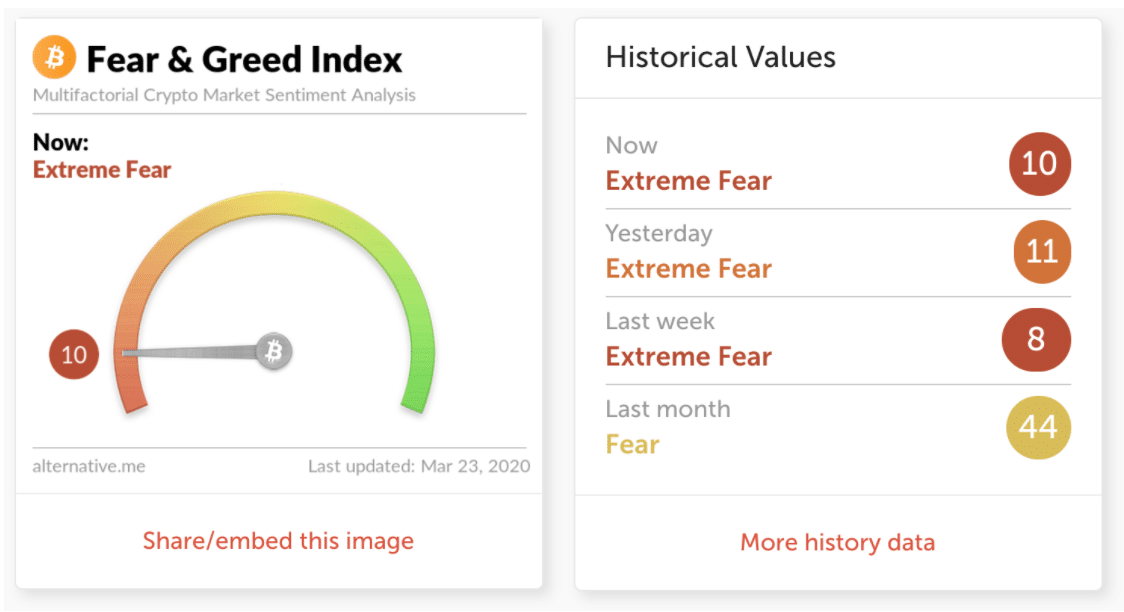 Is Bitcoin security in the time of crisis? Bitcoin plummeting by over 50% in the course of March would suggest otherwise. The global community of investors seems as fearful as ever, and fairly so as we collectively try to deal with this global coronavirus pandemic and national quarantines. Was the early April price spike the result of sophisticated and mainstream traders? Likely. A recent survey of traders and investors by popular exchange Kraken placed $22,866 as the bitcoin price target, which would surpass Bitcoin’s previous ATH of around $19.5k. However, if we look past the blatant speculation that has plagued digital assets for years, we have an extremely important threat to follow: how will U.S. inflation due to its recent and future stimulus package affect Bitcoin and digital assets?
The U.S. Inflation and Bitcoin:
The U.S. Dollar has witnessed a lot since its creation in 1792: a Civil War, two World Wars, a handful of lethal pandemics. Its seen the rise and fall of superpowers. It’s survived Depressions and thrived in booming economies. Despite this or because of it, the Dollar has become the de facto world currency. In 2019, nearly 61% of all known central bank foreign exchange reserves were made up of the U.S. Dollar (the second most popular is the euro with 20%.) 65% of all U.S. Dollars, about $580 billion, are used outside the United States and mostly in former communist countries in the old Soviet Union bloc and Latin America. Entertaining the idea of a future where the U.S. government doesn’t dominate the political scene or is forced into a tertiary “ailing empire” role, is far outside the immediate realm of belief for the vast majority of Americans. However, it’s more real than ever. Instead of rattling and prophesizing America’s threats like war hawk political talk show pundits, we’ll re-focus on the impact of Coronavirus (COVID 19) on Bitcoin, and what that means for the U.S. Dollar. Coronavirus has given hundreds of millions of Americans a small taste of what a catastrophic economy feels like: going to supermarkets and not being able to get what you want, having very limited recreational or nightlife options, and for many, being forced into becoming financially dependant on your government. It’s hard to imagine George Washington and Alexander Hamilton planned for an America that has $23.5 trillion in national debt and is rapidly printing currency to keep its hundreds of millions of citizens alive at home.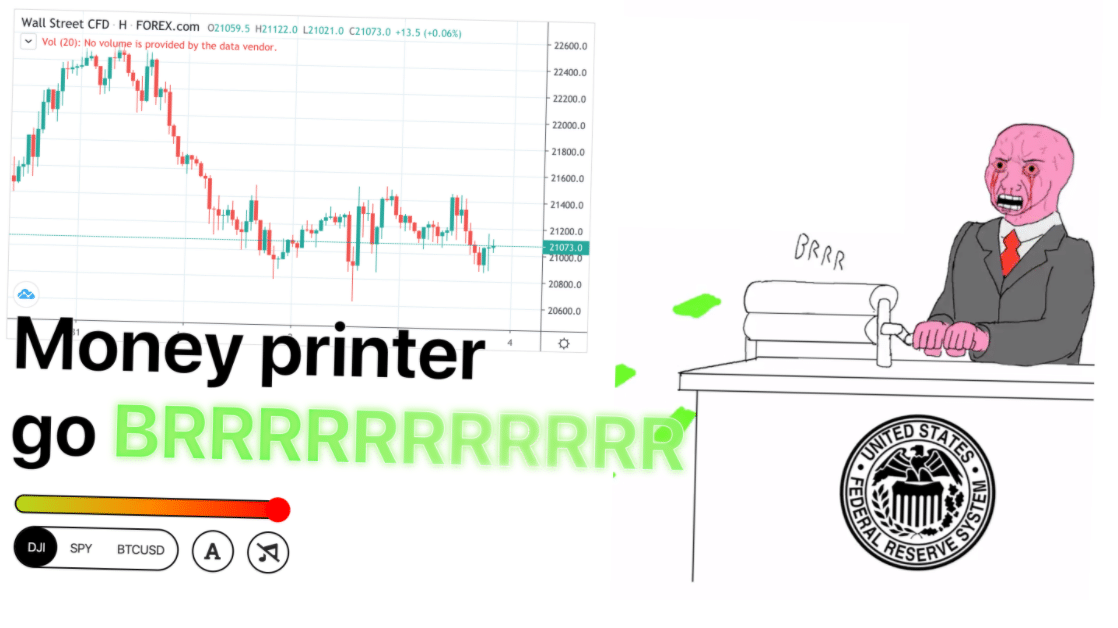 There are few antagonists of the current U.S. stimulus plan with better solutions. Scold all you want, but there are going to be millions of people relying on government aid to pay for life’s basic necessities like food and water. The general population is less concerned with inflation and more with surviving. However, that doesn’t eliminate the threat of hyperinflation. One doesn’t need to look far past the Hong Kong riots and Venezuela’s dilapidated economy to understand why Bitcoin is receiving international attention as a viable alternative to native currency.
 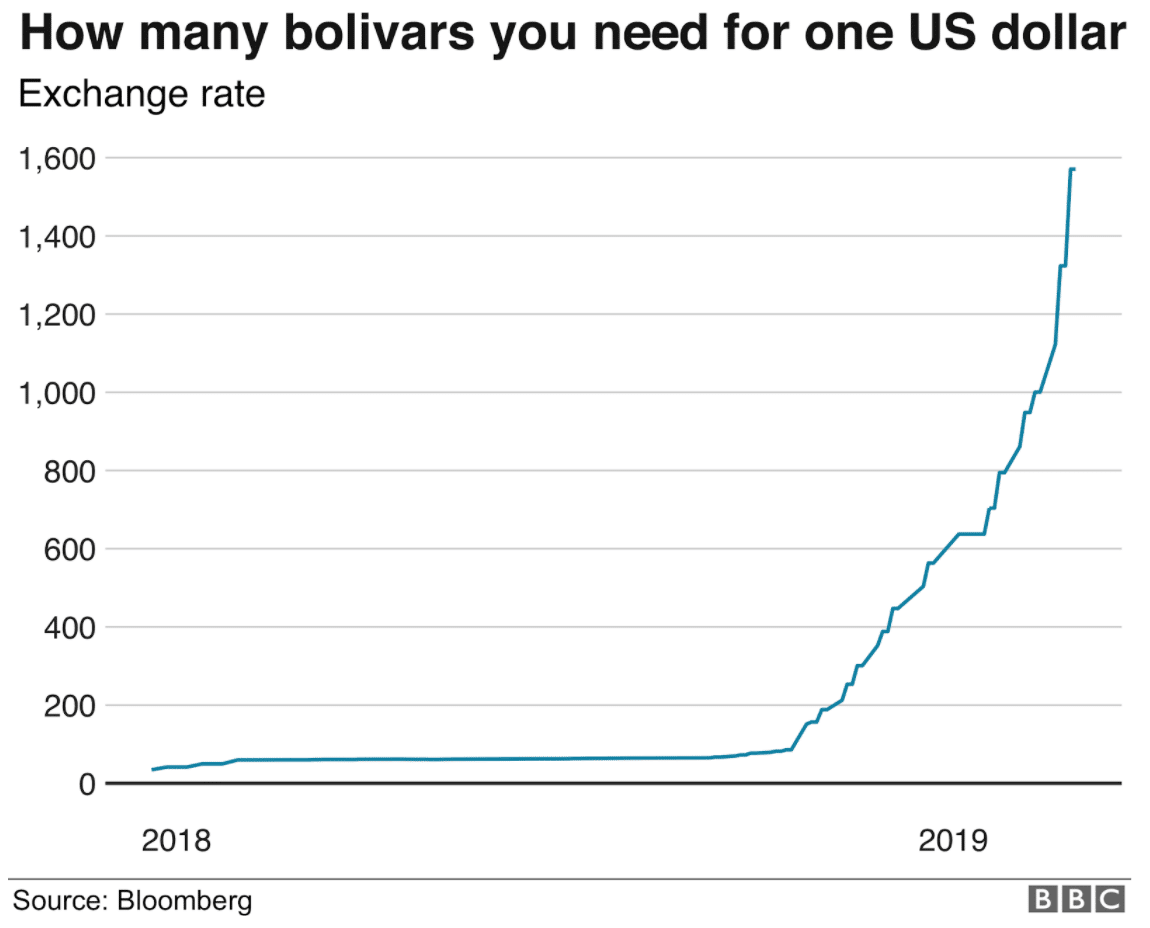 In 2017, Chamath Palihapitiya, the Founder of Social Capital and Co-Owner of the Golden State Warriors, once predicted Bitcoin’s price would hit $100,000 in the next three to four years and $1,000,000 in the next twenty. “This thing has the potential to be comparable to the value of gold,” sais Palihapitiya. This is a fantastic hedge and store of value against autocratic regimes and banking infrastructure that we know is corrosive to how the world needs to work properly.” At one point, Palihapitiya owned about 5% of all BTC in circulation, so it’s fair to say its sentiments sway bullish. However, it’s hard to look past the substantial value BTC and other digital assets offer citizens in countries like Venezuela. The once-rich country now has currency hovering around a 10,000,000% inflation rate, which has many citizens turning to BTC as a store of value.

