
7nm ASICs Will Bring Bitcoin Mining to a Whole New Level
 This week news.Bitcoin.com reported on the Japanese corporation GMO Group announcing plans to start a bitcoin mining operation using 7 nanometer (nm) semiconductor chips. Many bitcoiners are curious about this news as 7nm chips are not commercially produced at the moment. However, many people still understand the introduction of more advanced ASIC processors will be a complete game changer within the bitcoin mining industry. Also read: Korean Court Rules Bitcoin Cannot Be Confiscated
GMOs 7nm Chips Will Be a Game Changer for Bitcoin Mining

Smaller and More Efficient Chips Are Good for Decentralization


With Increased Optimization is Centralization an Issue?
Mining pool monopolies, faster chips and topics like the ASIC Boost patent has created a lot of mining centralization debates over the past two years. Miners who were once regarded as protectors of the Bitcoin network has later been considered monopolistic entities. Over the past few months, as the scaling debate intensified, mining optimization has been deemed unfavorable and the drama has escalated to talks of changing Bitcoin’s proof-of-work. However, this month Ledger Journal published a paper written by Nicola Dimitri that explains that fear involved with mining centralization is misleading. The paper discusses the subject analyzing mining game theory and other topics like whether or not 51% attacks are truly a threat. Dimitri further details that bitcoin mining’s “incentive structure naturally prevents the formation of a monopoly,” and further details that mining is more profitable with fewer pools actively mining.[Bitcoin] mining activity seems to be intrinsically monopoly-proof, in the sense that if only two miners were to be active, their profits would always be positive regardless of the marginal cost of the opponent. For this reason, none of the two could exclude the other by cutting down his own costs, unless activities other than bitcoin mining would have a higher rate of return.
7nm Chips Close in on Moore’s Law
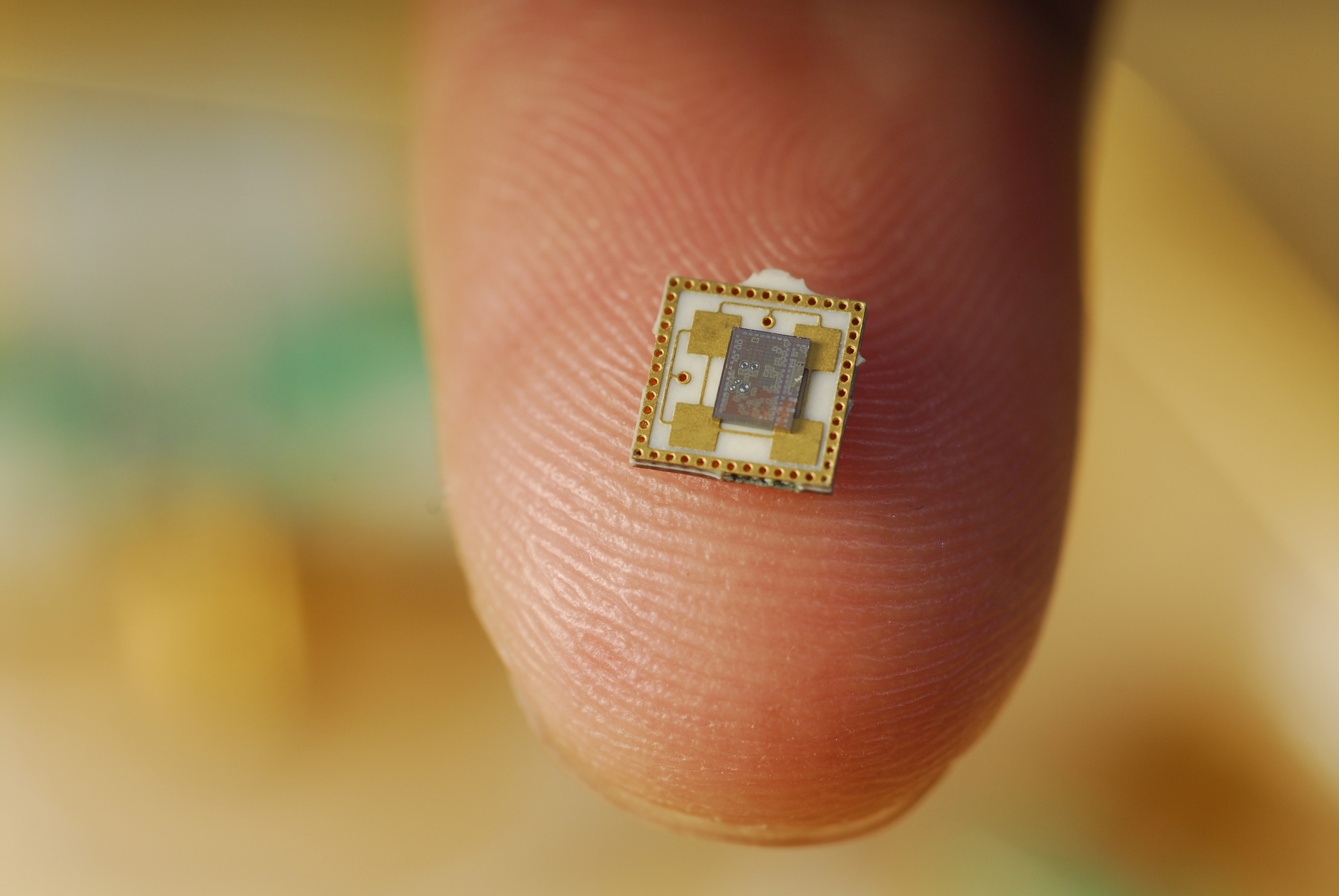
It will be interesting if GMO manages to produce 7nm chipsets in their mining machines as the semiconductor chips will be significantly smaller, and more efficient than the 16nm versions predominantly used today. The company further states it will be manufacturing the 7nm boards for resale as well, which will bring the next generation mining chips to the general public and competing mining pools. If the Japanese firm kept the chips a secret, with the industry standard currently set at 16nm, GMO Group’s proprietary chips could basically wipe competition off the map if they don’t have the same technology. Further, the 7nm chip will be getting closer to the possible ceiling of Moore’s Law, which brings extreme production difficulty for 5nm builds and then semiconductors will drop to an even smaller design that will be even harder to procure. What do you think about 7nm chips coming to the bitcoin mining industry? Let us know in the comments below.
Images via Shutterstock, Wiki Commons, antonopoulos.com, IBM, and GMO Group.
The Bitcoin universe is vast. So is Bitcoin.com. Check out our Wiki, where you can learn everything you were afraid to ask. Or read our news coverage to stay up to date on the latest. Or delve into statistics on our helpful tools page. The post 7nm ASICs Will Bring Bitcoin Mining to a Whole New Level appeared first on Bitcoin News.
7nm Mining Chips Andreas Antonopoulos ASIC Boost ASICs Bitcoin network Globalfoundries GMO Group Intel Mining moores law N-Technology Pools Samsung Technology TSMC


